404 MediaMay 27, 2025
Using public-records data from a small Illinois police department, reporters showed that local and state police ran over 4,000 Flock ALPR searches tagged with immigration-related reasons in under a year, despite Flock having no formal contract with ICE. Argues this effectively gave federal immigration agents backdoor access to a nationwide plate-tracking network through Flock's cross-agency search sharing.
Read ArticleElectronic Frontier FoundationOctober 7, 2025
EFF obtained court records contradicting a Texas sheriff's office's public claim that an 83,000-camera Flock network search for a woman was a welfare check; a detective's sworn affidavit instead described the case as a death investigation tied to a self-managed abortion. Prosecutors ultimately said state law didn't allow charges, but the episode became a flashpoint for fears that ALPR searches could be used to police reproductive healthcare decisions.
Read ArticleElectronic Frontier FoundationDecember 30, 2025
This year-end roundup summarizes a year of EFF reporting on Flock, including discriminatory searches, immigration-enforcement access, protest surveillance, and the company's expansion into audio detection. It credits community organizing built on that research with driving several cities to cancel or refuse to renew their Flock contracts.
Read ArticleAmerican Civil Liberties UnionJuly 2, 2026
ACLU analysts compile examples where they say Flock gave city officials and the public misleading assurances about data sharing, retention, and oversight, including a case where a Wisconsin city council rescinded a contract just a day after approving it once it learned more. Argues municipalities should treat the company's public statements with skepticism and impose strict independent guardrails before adopting ALPR systems.
Read ArticleReasonAugust 13, 2026
Traces how Florida investigators used a Flock camera hit to tie a young woman's SUV to a fatal hit-and-run, despite evidence at the scene that didn't match her vehicle, leading to felony charges and jail time before the case collapsed seven months later. Uses her ordeal to raise broader questions about how much weight police and prosecutors place on automated camera matches.
Read ArticleFuturismSeptember 15, 2026
Covering the same Florida case from a different angle, this piece emphasizes that the woman spent 13 days in jail facing eight felony counts even though her car's color and lack of damage didn't match witness accounts of the crash vehicle. Charges were dropped only after authorities identified a different driver.
Read ArticleGovernment Technology (Govtech)June 4, 2026
This trade-press explainer surveys the range of controversies fueling opposition to Flock (unauthorized data sharing, use in immigration enforcement, and dozens of contract cancellations) and notes that roughly 82 jurisdictions across 28 states had terminated Flock agreements as of the article's writing. Also touches on new state-level legislation aimed at restricting how ALPR data can be retained and shared.
Read ArticleFortuneAugust 24, 2026
Profiles Flock as a venture-backed company valued at roughly $8 billion whose camera network spans thousands of communities, framing its current troubles as a business story as much as a civil-liberties one. Details dozens of contract terminations since 2021, camera vandalism reported in three dozen states, and documented cases of officers misusing the system to track people outside legitimate investigations.
Read ArticleThe Record (Recorded Future News)November 21, 2025
Reporting on an EFF dataset, this piece describes more than 50 law enforcement agencies running Flock searches tied to demonstrations over a ten-month window. Frames this as evidence that ALPR infrastructure built for traffic and crime enforcement is also being used to monitor First Amendment-protected activity.
Read Article10News San Diego (KGTV)2026
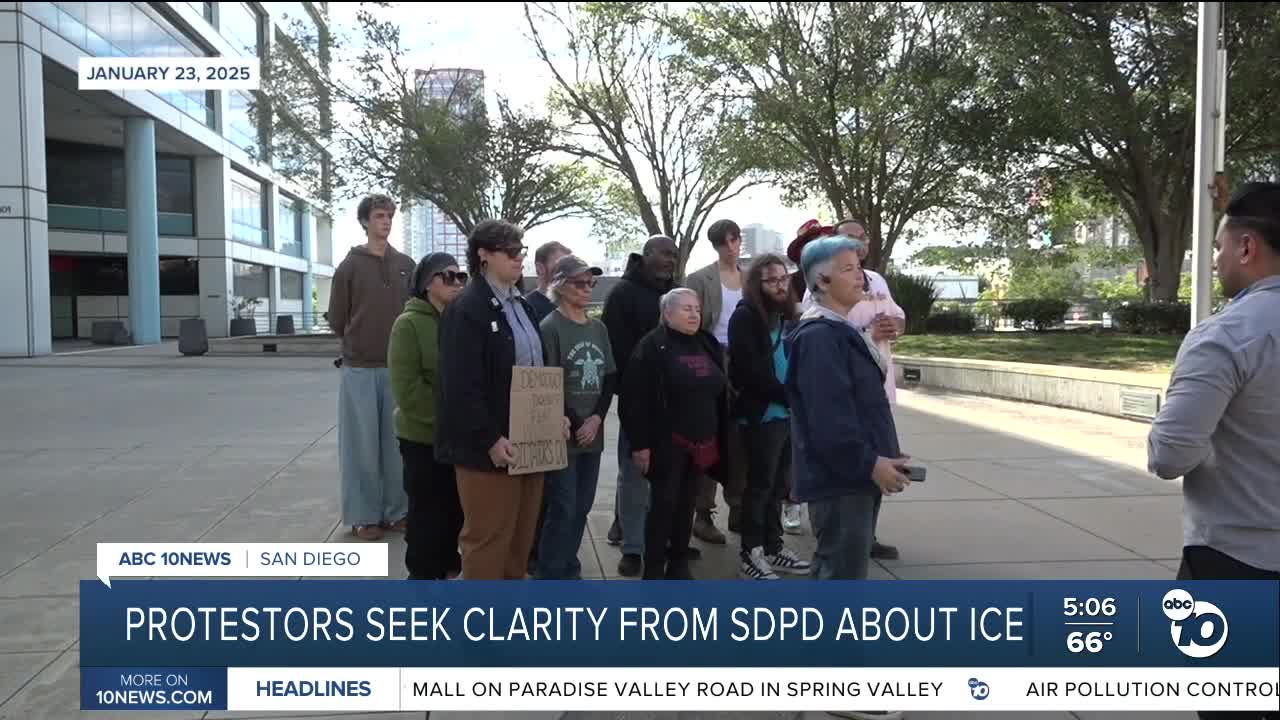
Two men are suing San Diego after being arrested when a Flock camera flagged a car matching only the make and model, not the license plate, of a vehicle sought in a shooting, leading police to their similar car five miles away. Charges were later dropped, and the lawsuit alleges the department could have avoided the wrongful arrest by checking the actual plate number before acting.
Read ArticleACLU of Rhode IslandAugust 7, 2026
The ACLU of Rhode Island calls on a town council to end its Flock contract after a local woman was wrongly arrested based on a photo captured by one of the cameras, not just a license plate match. Argues the incident shows Flock's cameras collect more identifying detail than officials have disclosed to the public.
Read ArticleDaily EmeraldDecember 6, 2025
Reports that Eugene's police department terminated its Flock contract after citing unresolved data-security and operational concerns, following months of public pushback and an ACLU records lawsuit. The city council had earlier voted unanimously to pause the cameras, and the department released a map of camera locations shortly before the cancellation.
Read ArticleGizmodoSeptember 18, 2026
Reports that Senator Josh Hawley, alongside a Senate Judiciary subcommittee, summoned Flock's CEO and counterparts from several rival surveillance-camera companies to a hearing on AI-driven camera networks. Frames the hearing as a bipartisan response to mounting concern over how much location data these companies collect and who can access it.
Read ArticleABC NewsSeptember 1, 2026
Surveys the scale of opposition to Flock, citing over 50 cities and counties that deactivated cameras and vandalism incidents reported in at least three dozen states, alongside specific misuse cases like an officer's repeated tracking of an ex-girlfriend. Balances this against law enforcement claims that the cameras help locate missing people and assist roughly a million investigations a year.
Read ArticleCBS News ColoradoOctober 29, 2025
Covers a public dispute between Denver's city council and mayor after his office moved to extend the city's Flock contract despite an earlier council vote against it. Council members criticized being sidelined from a surveillance oversight process that was supposed to involve their input before such decisions were finalized.
Read ArticleTruthoutJuly 10, 2026
Examines how a June 2026 Supreme Court decision requiring warrants for geofence location requests could set a legal precedent applicable to Flock's camera network, even though the ruling didn't address ALPRs directly. Legal advocates see it as a potential tool against mass surveillance, while cautioning that litigation alone won't roll back deployment absent stronger legislation or continued local organizing.
Read ArticleWausau Pilot & ReviewFebruary 26, 2026
A Milwaukee police officer faced misdemeanor charges after audit logs showed he searched two women's license plates dozens and even over a hundred times through the department's Flock system, reportedly tied to a personal relationship. As part of a plea arrangement he agreed to resign from the force, and the case became a touchstone in broader Wisconsin debates over ALPR oversight.
Read ArticleKTVU FOX 2February 27, 2026
Reports on a California class action accusing Flock of violating the state's ALPR Privacy Act by letting out-of-state and federal agencies search driver data collected by local police departments. Cites figures showing outside agencies queried one department's Flock database over 1.6 million times in a seven-month span.
Read ArticleFox NewsSeptember 18, 2026
Confirms that Flock's CEO and executives from three competing surveillance-camera companies were called before a Senate Judiciary subcommittee for a hearing on AI camera networks and data access. Senator Josh Hawley is quoted framing the inquiry as an effort to determine who holds Americans' location data and how it's being used.
Read ArticleThe New York TimesSeptember 18, 2026
In this opinion piece, digital-rights advocate Evan Greer argues the nationwide wave of organizing and vandalism against Flock cameras shows privacy advocacy isn't a lost cause, framing the backlash as evidence that people care deeply about surveillance even when they feel powerless against it.
Read ArticleThe New York TimesSeptember 28, 2026
Public records show NYPD officers made more than 1,700 searches using Flock Safety's technology even though the department had no contract with the company, raising questions about how officers gained access and what oversight applies to that use.
Read ArticleTech TimesJuly 18, 2026
Reports that Flock discontinued a pilot feature designed to detect human screaming after sustained criticism from EFF, but notes the underlying microphones remain active and still listen for gunshots, crashes, and other sounds. Argues that because Flock can reconfigure this audio detection through software without public notice, the underlying privacy concern isn't fully resolved even with the feature removed.
Read Article